
Accidental Insults: A Survival Guide to Language Blunders and How to Fix Them
Let me tell you about Marcus.
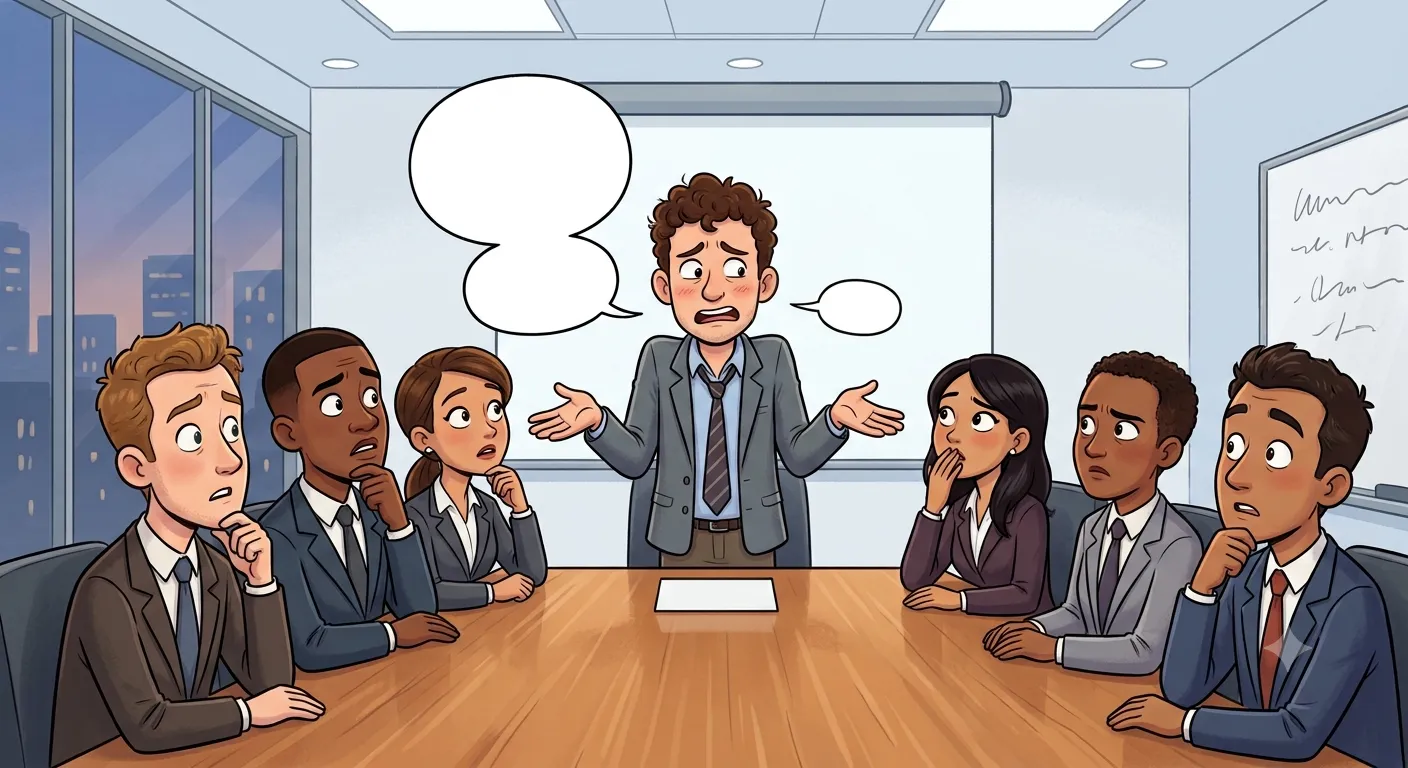
Marcus was three months into learning German. He was doing well—Duolingo streak intact, grammar exercises completed, vocabulary growing.
Then he went to a business meeting in Munich.
He wanted to say “I’m excited about this project” in German. What came out of his mouth was “Ich bin heiß für dieses Projekt.”
The room went silent. Then someone gently corrected him: “You mean ‘Ich bin begeistert.’ You just told us you’re… sexually aroused… by this project.”
Marcus wanted to die.
The Fear That Keeps You Silent
You know what’s worse than not speaking a language?
Speaking it wrong at the worst possible moment.
Mispronouncing a word and accidentally calling your colleague’s mother a prostitute. Using the wrong verb and telling your host their food tastes like garbage. Mixing up formal and informal pronouns and offending your boss.
These aren’t hypothetical scenarios. These are real mistakes that real learners make. And the fear of making them is one of the biggest reasons people stay silent even after years of study.
Because here’s the thing: you don’t know what you don’t know.
Your app won’t tell you that “embarazada” in Spanish means pregnant, not embarrassed. Your textbook won’t warn you that certain hand gestures are offensive in Italy. Your podcast won’t explain that the word you just learned has a completely different meaning in slang.
You’re walking through a linguistic minefield, and you don’t have a map.
Why Self-Study Can’t Protect You
When you study alone, you learn the language in a vacuum.
You memorize words without cultural context. You practice phrases without understanding when they’re appropriate. You learn grammar rules without knowing when native speakers break them.
Then you use your carefully studied language in the real world, and you accidentally:
- Use extremely formal language with teenagers (making them laugh at you)
- Use extremely casual language with authority figures (making them angry at you)
- Translate idioms directly from English (making zero sense to anyone)
- Use a word that’s technically correct but has an unfortunate double meaning
- Apply a grammar rule that’s “correct” but sounds bizarre to native ears
And the worst part?
You often don’t even know you made a mistake.
People are polite. They let it slide. They don’t correct you. You walk away thinking you nailed the conversation, while everyone else is trying not to laugh.
Or worse—they’re offended, and you have no idea why.

The Assessment Gap Nobody Talks About
Here’s what most language learners miss:
You need someone to assess not just whether your language is “correct,” but whether it’s appropriate.
Grammar apps can tell you if your sentence structure is right. But they can’t tell you:
- Whether what you said sounds rude
- Whether you used the wrong register for the situation
- Whether that word has connotations you’re not aware of
- Whether your pronunciation accidentally turned an innocent word into a curse
- Whether your body language contradicted your words
Only a real human who knows the culture can catch these things.
And only a tutor who regularly assesses your language use in realistic scenarios can help you avoid these disasters before they happen in real life.
How Regular Assessment Saves You From Yourself
Imagine this alternative scenario:
You’re working with a tutor. Every two weeks, they run you through assessment scenarios that mirror real-life situations:
Scenario 1: Business Context
Your tutor: “You’re in a meeting. Introduce your idea to the team.”
You try. You use the language you’ve been studying.
Your tutor stops you: “Okay, grammatically correct, but you just used casual language in a formal business setting. Let me show you how that sounds to native ears.”
They explain the difference. They make you practice the formal version until it’s natural.
Crisis averted. You didn’t have to learn this lesson by embarrassing yourself in front of colleagues.
Scenario 2: Social Context
Your tutor: “You’re at a dinner party. Compliment the host’s cooking.”
You say what you practiced.
Your tutor: “Stop. That phrase is technically correct, but it implies the food is just ‘acceptable.’ Here’s how to actually express that you love it.”
Disaster avoided. You didn’t accidentally insult someone’s grandmother’s recipe.
Scenario 3: Casual Context
Your tutor: “You’re talking to a new friend your age. Tell them about your weekend.”
You respond in overly formal language.
Your tutor: “You sound like a Victorian nobleman. Here’s how actual young people talk.”
Social awkwardness prevented. You won’t be the weird foreigner who talks like a robot.
The Assessment Types That Matter
When you work with a tutor who does regular assessments, they’re not just checking your grammar. They’re evaluating:
1. Register Appropriateness
Can you shift between formal, neutral, and casual language depending on the situation? Or do you use the same tone with everyone, making some interactions awkward?
Assessment reveals this instantly. Your tutor puts you in different scenarios and grades how well you adjust your language.
2. Cultural Sensitivity
Are you using words, phrases, or structures that are technically correct but culturally off? Are you using idioms that don’t translate? Are you making assumptions from your native culture that don’t apply?
A good tutor catches these before you make them in public.
3. Pragmatic Competence
This is the fancy linguistics term for “can you actually communicate your intended meaning, or are you accidentally saying something else?”
Your tutor assesses whether what you think you’re saying matches what you’re actually saying. Because often? There’s a huge gap.
4. Error Pattern Recognition
Everyone makes mistakes. But are you making the same mistakes repeatedly? Are there specific areas where you consistently misunderstand or misuse language?
Regular assessment identifies these patterns. Then your tutor designs practice to break them before they become fossilized habits.
The Blunder-Proof Path
Here’s what six months of regular contextual assessments with a tutor looks like:
Month 1: You make a lot of mistakes. Your tutor catches them. You feel embarrassed, but in a safe environment.
Month 2: You start recognizing some mistakes before making them. Your brain is learning the patterns.
Month 3: You begin self-correcting in real-time. You catch yourself about to say something inappropriate and adjust.
Month 4: You develop a “sixth sense” for register and context. You intuitively know what sounds right for different situations.
Month 5: You make fewer cultural blunders. The feedback has been internalized.
Month 6: You can navigate most social and professional situations without accidentally offending anyone or sounding ridiculous.
All because someone was systematically assessing and correcting the kind of mistakes that apps can’t catch.
But What If I Still Make Mistakes?
You will. Everyone does. Native speakers make mistakes too.
But here’s the difference:
Without a tutor: You make mistakes and don’t learn from them because nobody tells you. You keep making the same blunders for years.
With regular assessment: You make mistakes in practice, get corrected immediately, and rarely make the same mistake twice.
Plus, your tutor teaches you the magic phrases that save you when you do mess up:
- How to apologize gracefully
- How to ask if what you said was appropriate
- How to recover from a blunder without making it worse
- How to laugh at yourself without being self-deprecating
These “social recovery” skills are just as important as avoiding mistakes in the first place.
The Confidence That Comes From Safety
Here’s what happens to your confidence when you know someone has been regularly assessing your language for appropriateness:
You stop second-guessing yourself. You know that if you were consistently saying things wrong, your tutor would have caught it.
You speak more freely. The fear of “what if I’m accidentally insulting someone?” diminishes because you’ve been trained to avoid those errors.
You trust your instincts. After months of feedback, your brain has internalized what’s appropriate. You don’t have to consciously think about every word anymore.
And when you do make a mistake? You know how to handle it gracefully instead of panicking.
The Real Cost of Winging It
What happens if you skip this kind of assessment and just “wing it” in real conversations?
Best case: You sound a bit odd. People find you charming or amusing. No real harm done.
Worst case: You offend someone important. You damage a relationship. You create an awkward situation that affects your job, your social life, or your travel experience.
Most common case: You develop fossilized errors—mistakes that become so habitual you can’t break them even years later because nobody corrected them early.
Is that worth saving $20 a week on a tutor?
Your Move
You can keep studying with apps and hoping you won’t accidentally insult someone when you finally use the language in public.
Or you can work with a tutor who regularly assesses your language in realistic contexts—catching your blunders before they happen in real life, teaching you cultural nuances, and giving you the confidence that what you’re saying is actually appropriate.
One path leads to anxiety and eventual embarrassment.
The other leads to confident, appropriate communication.
Marcus, by the way? After his “I’m aroused by this project” disaster, he hired a tutor who drilled him on business German in realistic scenarios.
Six months later, he gave a presentation in Munich. No accidents. No awkward moments. Just clear, appropriate, professional German.
He could have had that confidence from the start.
You can too.
Ready to avoid the linguistic landmines? Find a tutor on iTalki, Preply, or Verbling who specializes in contextual assessment—not just grammar correction. Tell them you want regular practice in different social and professional scenarios.
Book your first assessment this week. Learn the difference between “technically correct” and “actually appropriate.”
Because the best language mistake is the one you never make in public.